
By Joy Tanner
(20-minute read)
Paul Sun-Hyung Lee is one of the most humble and hard-working people in our business. He’s also one of the most famous actors in the country. Dare I say, he’s an icon? His distinguished awards would indicate that, so I think it’s fair to say yes. I’d also like to add that he is gracious, grateful, thoughtful and contemplative. He is kind. He is talented. And he is my friend. Paul and I first met in 2003 on the set of 1-800 Missing. We had one scene together in which we were both playing doctors who were finishing their shifts. It was simple, easy and memorable because it didn’t feel like we were acting. It was conversational and full of camaraderie. And the scene was less than 30 seconds. I never forgot that. Apparently, neither did Paul, who brought it up in the first five minutes of our conversation for this article. I was excited to celebrate and chat with him about the Award of Excellence, which, by the way, he almost didn’t accept because he thought: “Do I really deserve this?” Um, yes..! Our meanderings took us into important territory, including identity, racism and what makes a good artist. The craft. We geeked out about cosplay and collecting. He also shared treasured family stories. We talked for over two hours and could have gone way into overtime. Here is just a little bit of what Paul offered during our conversation.
There is an abundant repository of institutional knowledge that Paul carries and, by osmosis alone, shares with his youthful castmates, whether on the set of Avatar: The Last Airbender or, more recently, FX’s Adults. He leads by example: “Do your homework. Be prepared. Know your lines. Show up on time.” And it is in his being so present that the magic occurs. I think I looked at my questions once or twice; and what was so wonderful was that as soon as the Zoom link connected, we tumbled into the interview, which by no means felt like an interview. It was an ardent sharing of thoughts and a conversation of topics, driven by Paul. Right off the bat, we got into how long we’ve been in the business and what that means in relation to working with today’s youth. “We are all getting old.” (Tell me something I don’t know…). “It’s interesting because it’s not an age thing but a generational thing. A cultural thing. Youth culture was so much different when we were younger; [we were] Gen X kids cutting our teeth in our mid-to-late twenties. Working on shows, hustling, and trying to get stuff done. And I wonder, was this how we appeared to the more experienced actors who’d been around? Who had their [already established] careers?” He shifts to his work on Avatar: The Last Airbender. “I was shooting in Vancouver for the last four years.” As a veteran cast member, he notes how young the ensemble was. I ask him if he thinks it’s easier for these vernal actors now compared to when we were coming up in the ’90s. “It’s this weird sort of thing. The amount of work that is now available, there is more. It’s kind of yes and no. And no and yes. It all depends. And I can only speak to my experience. If you’re BIPOC, there are more opportunities now than there were before. In terms of the quantity of work, but also the quality of the work. It’s opened up. There’s still a way to go, but it’s improved since I started [acting] in the ’90s.” He reflects, “What kinds of roles was I allowed to audition for? Or be considered for? There’s been a big shift.” Paul highlights how the industry has evolved and what those implications are for performers. “Also, the amount of content that was available when we started, before the dreaded CRTC change in 1999, when the Canadian productions were cut in half…” His voice trails off. “There were always the network shows, but now with all of the different content providers…” He identifies what we have seen in the business, a shift towards a service industry. And while he sees the constructive side to this from a BIPOC lens, I can’t help but feel his ambivalence. “The productions from the U.S., the companies coming in internationally, and the deals with Amazon and Apple and Netflix – it feels like there’s so much more out there now. There is more work for younger people. But there are more [people] being drawn to this profession because they are being sold the idea that you can become a working actor or an influencer or famous. So, there is this influx of people who want to be seen. To have their faces on the screen. And there are different ways of doing it now than when we were their age.” He comments on the influences of social media, “Tik Tok and Instagram – you can become a vertical content star and parlay that into studio deals.” The production companies capitalize this built-in audience, something our generation never had to contend with.
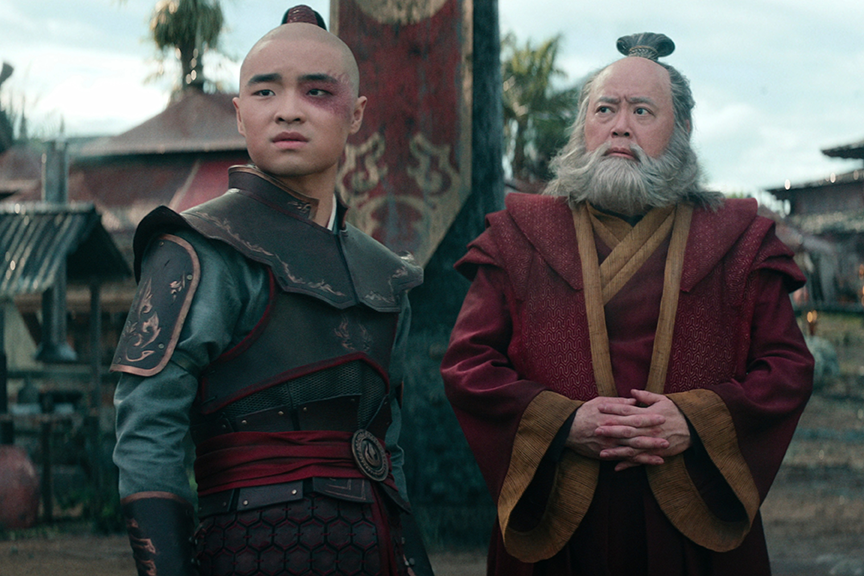
Our conversation interrogates how social media stardom influences the craft itself. “It has a huge effect on it. I think the craft has diminished. And I say this for any young person who comes up to me and says, “How do I become an actor and get into the business?” First of all, you need training. It is a craft. You’re not just pretending. There are so many levels to it. Just in terms of building a character, breaking down a script. All of those things. As well, professionalism on set. How to conduct yourself on a set. What is expected of you in this working environment? Like showing up for your pickup time, on time. Respecting boundaries. Getting to know what different departments do, so if you want a coffee, you’re not asking a grip, “Hey, can you get me a coffee?”” We laugh, but it’s serious stuff. “Maybe it’s this idea of what actors do on set? You get fed this fantasy world from TV or films about what set life is like. It’s not real, it’s not a great signifier as to what set life is actually like. It’s like watching a movie where aliens are simulating what life was like on earth based on all of the transmissions they’ve seen on TV; the majority of it is completely made up. It doesn’t ring true. And so, their perception comes from ignorance. They don’t know what they don’t know.”
We break into how important it is to be a disciplined and resilient actor. “It’s this whole idea of working together as an ensemble. On set, everybody is working together. EVERYBODY. The technicians, the heads of departments, the PAs. They are there to make you look good so you can tell the story as a performer. Every task is important. And it’s as collaborative as it gets. And if you’re not trained in that way or aren’t aware of the enormous amount of effort that goes into making a show, it’s very easy to disrespect a lot of people by accident. For instance, if you show up 15 minutes late. That’s the ripple effect. What I’d like to see is a little bit more awareness of that. And self-reflection. Because, yes, you can be number one on the call sheet, but you still have a responsibility to everybody: how you conduct yourself. Because you set the tone. If you show up and you’re not prepped, what message does that send to everybody else?” I ask him why he thinks this might be? “If you’re used to creating content on your own, you’re only answering to yourself. You follow your own schedule. But once you step into that bigger realm, then that’s where other responsibilities kick in. More experience is required for that self-reflection.”
Did you know?
ACTRA Toronto offers a mandatory Respect on Set course to new AABP, Apprentice or Full members. Contact ACTRA Toronto’s membership department to learn more.
It’s often on that first gig that you learn those very lessons. We shared memories of our first job; I had no idea what a master shot was. Paul shakes his head. “I did a movie of the week with A Martinez and Julianne Moore. Colm Feore was the heavy. It was called, Where’s the Money, Noreen. I’d been trained in theatre. And I’m on set and I don’t know the protocols or where to stand. I didn’t know what any of the terms that were being thrown about meant. I knew what blocking was, but otherwise, it was a very steep learning curve! Being able to play to camera, being aware of the light, so I wasn’t blocking off my fellow actors and just ‘bringing it down.’ Because I had to hit that back row! And of course, then being told to ‘bring it down!’” We talk about the differences between the theatre and on-camera work. Paul trained at the University of Toronto and has a robust theatre c.v., including Ins Choi’s Kim’s Convenience, which was the first national tour of an all-Asian cast. “There may be different terminology, but the craft is still the same. Intentions, how to build a character. The format is different, but the craft is the same. I still think it’s easier to transition from stage to screen than vice versa.” Restraint and nuance may be required for on-camera work, but, as he notes, “it’s harder to open it up. I find that screen actors who aren’t used to working on stage tend not to be in-tune with their bodies. They’re not as grounded as they should be, and they’re not supported [vocally].” It is clear that Paul’s work, whether on stage or on screen, is deeply rooted in craft technique. We see those methodologies in the characters he inhabits. And many of them are rooted in the concept of family. Whether it is Uncle Iroh from Avatar: The Last Airbender or Appa from the show that launched him into international stardom, Kim’s Convenience.
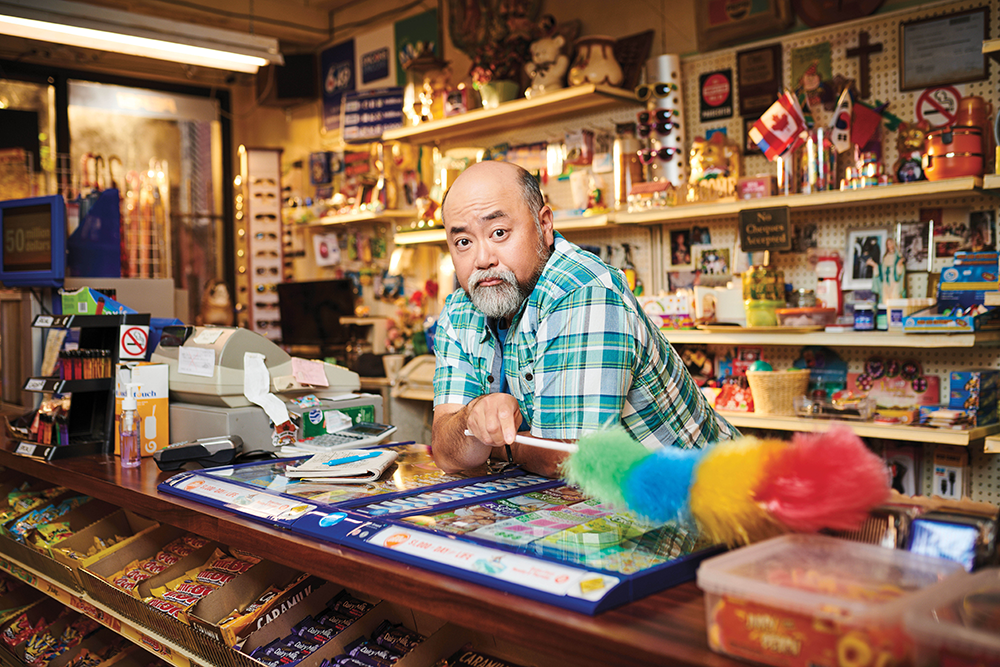
Many of the stories Paul shared with me were about his family. His two sons, his uncle and his parents, they carve a deep influence in his work. His tone shifts, he takes a deep breath, and I know things are going to get candid and vulnerable. “Growing up, I had a block. I didn’t want to be Korean. I wanted to assimilate. I didn’t want to be different than everybody else. And I was embarrassed by my family. My parents didn’t speak English very well. My food was different. All the afterschool specials I watched… [never represented me]. He imitates some of the bully’s he dealt with, “Oh your house smells funny… Oh, your parents are weird…” It’s painful in the retelling and it’s painful to hear. “And it didn’t help that all of the media I was consuming… I didn’t see people that looked like me or represented my family. Or whenever I did, they were ridiculed or made to feel the Outsider. They were looked down upon or pitied. They were the refugee. Or the brunt of a joke. So, I was raised to think that my family was lesser than.”
Like I said, it’s difficult to hear him meditate on his childhood. But he’s no victim. He’s reflective. “That was a time when punching down was easier.” And sadly, it was the norm. “How do we get a quick laugh in here? Let’s laugh at the Asian family chasing the cat. Not to save, but to eat. Cheap humour.” We talked about the 1984 film, Sixteen Candles and Gedde Watanabe’s character, Long Duk Dong. “I know so many people were mad at him for playing that character. But he had a chance to be in a John Hughes movie. And yes, there were moments when the script was punching down at his character, but in the end, he gets the last laugh. I still quote that film in an ironic sort of way. And while he was being treated like sh#t, there was sympathy for him because we knew he was being exploited.” Still, it’s a fine line. “And when the old white guy gets his [comeuppance], we celebrate Watanabe’s character.” Paul continues, “And so I pushed away my culture. I didn’t want to be Asian, I didn’t want to eat the food, I didn’t want to learn the language. I didn’t want to do anything my parents wanted me to do: play piano and speak Korean. It leaves a mark on you. You carry that with you. And so, when I became an actor, when I learned I could become an actor, I got the inevitable pushback from my parents.” On his journey, he comes to the realization why his folks were so adamant against his choice. They gave him only four career paths to follow: “a doctor, a lawyer, a teacher or a failure.” Naturally, his parents, who had “sacrificed” to make a better life in Canada, didn’t want their son to become that “failure.” You see, Paul was not the first actor in his family. A piece of information that came later to him, when he was in university and arguing with his dad about his career choice. His father dropped a significant piece of unknown family history: Paul’s uncle in Korea was a well-respected actor but lived in what could be described as very precarious financial circumstances. His voice cracks when recalling his dad’s story, “He LOVED his older brother. He doted on him. He didn’t know he had died until two weeks after the fact. He couldn’t even say goodbye to him properly.”
I was curious what he would ask his uncle now, if he could chat with him. “The craft. Working conditions. What were his struggles starting out as a young actor?” He had the chance to meet his uncle in grade six on a family visit to Korea. “He took me out for a day. He didn’t speak any English and I spoke very little Korean.” After a day of tagging along, eating street food and meeting his friends, the day ended with a film… “We watched a David Cronenberg bootleg on his TV.” Remember, Paul is in the sixth grade. “We watched Rabid!” The 1977 sci-fi horror film starring Marilyn Chambers. Paul bursts into peels of laughter. He describes the film to me, of which I’ll save you the details. “I remember it vividly! I ended up buying it on 4K so I could watch it after all of these years. Anyway, I’m thinking, “I don’t understand what’s going on! Why is he showing this to me?!” And I’d like to think, “Well, my nephew is Canadian. I’m an actor. Hey, this Cronenberg guy is a Canadian director, let’s see what Canadian film is like!” More laughter at the memory.
“My uncle was respected in his community. For me that is more important than any other accolade you could get. If you’re well respected by your peers, if you contribute, if you’re known as a good artist, you don’t need the fame or the fortune. You don’t need to be internet famous.” He unconsciously shifts to first person, which is so telling about Paul’s character, of his humility. “I don’t need people to say, ‘Oh! I’ve seen your work! You’re a celebrity!’ What I care about is, what is my reputation amongst my peers? Do I do good work when I show up? Am I remembered for kindness and being a professional?” Which is interesting, because these exact virtues may have been instrumental in getting hired for one of his most meaningful roles, Captain Teva, on The Mandalorian.

Paul recounts the story when he was at the 2018 Unforgettable Gala in Los Angeles for Kim’s Convenience. He was approached by relocated Canadian director Debra Chow, with whom he had worked on an independent short film nearly 30 years earlier. He made an impact on her and she wanted to work with him again. One episode of The Mandalorian turned into four. As a Star Wars fanatic from childhood, this was a dream job. You should check out his YouTube channel, @BitterAsianDude, to see a small portion of his Star Wars collectibles. His basement is elegantly filled with them and there may be a full storage space in an undisclosed location… He’s also a cosplay member of the 501 Canadian Garrison. That’s Darth Vader’s personal militia, fyi, and his costume needed to be rigorously approved by the group before he could join. What exactly is the 501? As Paul states, “Bad guys doing good.” They organize charity events, and you better believe their uniforms are as legit as they come, right down to their buttons! I ask him when his next charity event is and he replies, “Well, I kind of take away from the importance of the event now, so I don’t go anymore.” See, more humility and an understanding of what is truly important for him: the charitable work itself.
I wondered if he thought about compounding his success and relocating south. “I’ve never had a serious desire to move to the [United] States. The idea of moving to the U.S. is, uh, no. Home is Canada. Toronto is home. I understand the allure of Los Angeles. It’s hard to argue with sunshine and no humidity and beaches. There’s this feeling in L.A. that anything is possible; everyone wants to have a meeting and ‘hey, how can we make this work?’ It’s really intoxicating, but it’s just talk. It’s really easy to be in favour and then to fall out of favour.” He continues, “I made a pact with myself; the only time I would go down to L.A. is if I booked work. It’s such a shambles down there now. Nah, you know, I am good! It’s so good up here!” He pauses, “I only wish we had stronger domestic production in Canada. We should be capitalizing on that. To build a robust Canadian industry that isn’t siloed into check-marked productions, but to grow that Canadian directory of writers, producers and actors. To make things within our country. Now is the time to do that! You want to push culture, I say, hey it’s time, this is proudly made in Canada! We don’t need to import from anywhere else.”
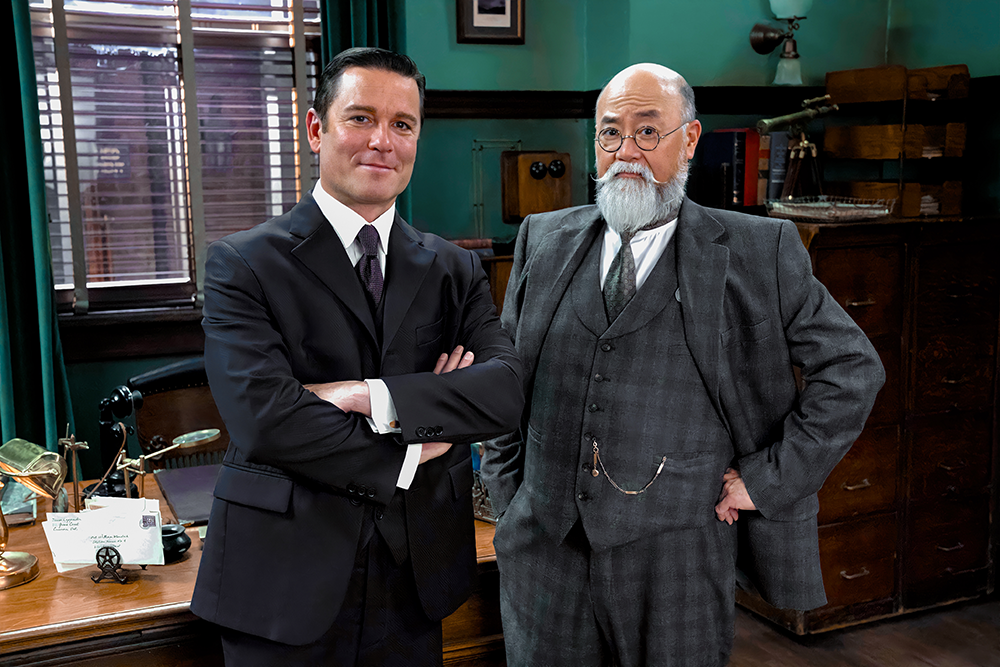
He notes that it is being done, “We have stalwarts like Murdoch Mysteries, which has been going for 20 seasons!” Paul plays Inspector Choi and is heading into his third season with the internationally beloved production. “My cup runneth over.” He speaks to the inclusivity on the show. “I wasn’t sure whether I’d enjoy it. It takes place in the early twentieth century. It’s predominantly white. It takes place in Toronto, and let’s be honest, there weren’t that many Asians here at that time. It’s like Anne of Green Gables or Wind at My Back, all of these great Canadian stories, but nothing to offer for me.” So, he was reticent when the call came in. “It’s not my wheelhouse. And I’m not disparaging the stories or the writing or the acting, it’s just, there’s nothing there for me. And I’m more into sci-fi and aliens.” He was still shooting Avatar in Vancouver but, thankfully, he reconsidered. “Did I not (bleep)ing fall in love on day one?! There is a reason it is going on for 20 seasons. There is a level of mutual respect and accountability and compassion on that set. There are crew members from Kim’s whom I love. Yannick [Bisson] is a leader from top to bottom. The cast is lovely, the heads of department are so wonderful. The producers are amazing. It is a well-oiled machine that takes into account humanity. They care about everybody who is there.” His commendatory thoughts continue for another few minutes. It is clear that Murdoch is a superlative experience.
Paul has been an ACTRA member for 31 years, so I have to ask, what does it mean to be a union member? “Being an ACTRA member has meant so much. As a younger actor, it was something to strive towards. It’s a standard of excellence. It’s hard to get into ACTRA – you need to be a working actor. And so that was a definite goal of mine. It not only represents the best of us, it is there to protect the best of us. And I think unions in the purest sense have always been for the workers. There is a standard level of order and rules in place to protect the members. When used collectively, it can be a powerful thing. Especially [for] a group of artists who have traditionally been run roughshod over. I remember getting my first permit! Then there was Harriet the Spy. I got my card shortly after that. Getting my ACTRA [membership] card helped me get my Equity card because of the reciprocal agreements [ACTRA has with other unions]. It is a point of pride. I am a card-carrying member of an actors’ union, which legitimized me. And to know I wasn’t alone. That is a point of pride.” He notes marching on Labour Day and the significance of advocating performers rights, “We shouldn’t lose sight of that.”
You can see why Paul is being honoured by his peers. “Being selected for this singular honour is very humbling.” Paul is no stranger to awards, including the prodigious Governor General’s Award. “My response is always like, ‘Really? Why?’ I don’t particularly feel I deserve it. I’m honoured, but there’s always that imposter syndrome. I’ve done my best, I’ve worked really hard. I’ve been fortunate enough to work and tried really hard to do more good than harm with the people I’ve worked with.” Do you see a pattern here? Humility and kindness wrapped in the mould of an actor. Relationships matter. Awards are not the end game. “I’m simply doing what everyone should be doing.” Being a good person.
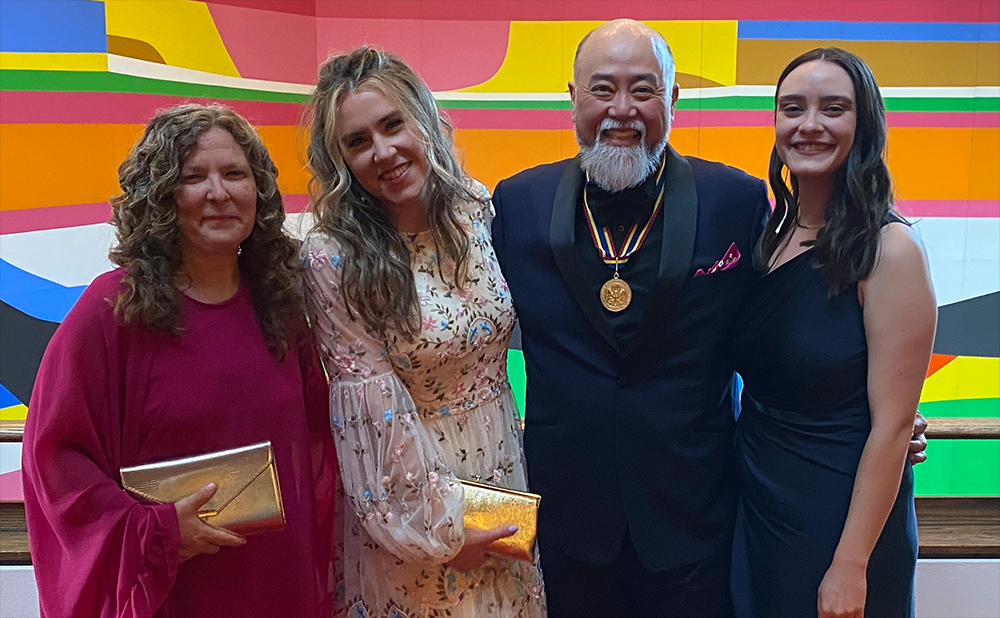
“Having said that, it is a validation after years and years of hard work. Of my longevity in this business, I’ve always joked that I’m too stupid and too stubborn to quit. And so I’m still here. And to be present during this time, with all of the changes [the industry has seen] from the early ’90s to now, like wow! Seeing how representation has changed, inclusivity has changed. The narratives and depth and breadth of stories.” Paul has seen the shifts, “And navigating the minefield of AI and self-distribution and self-promotion.” He reminisces on how filmmaking has evolved since he started out. “You can make a film on your phone! That opens things up. To see how this art is being challenged in so many ways; practically, stylistically. When can AI be employed to help art, NOT to create but to aid it? There is so much going on and I feel like such a small part of it. So, I am very, very grateful to be selected by my peers. It is an incredible honour. To use this [opportunity] to help inspire others and be that example.” Yup, no doubt in my mind, Paul, you have opened that door, reached out your hand and are pulling the new generation through with intentionality, mastery and incredible kindness. Congratulations, my friend, this is an award well deserved.